
Default ·
China’s Expanding Role in Global Governance Draws Attention at 14th World Peace Forum Amid Rising Geopolitical Fragmentation
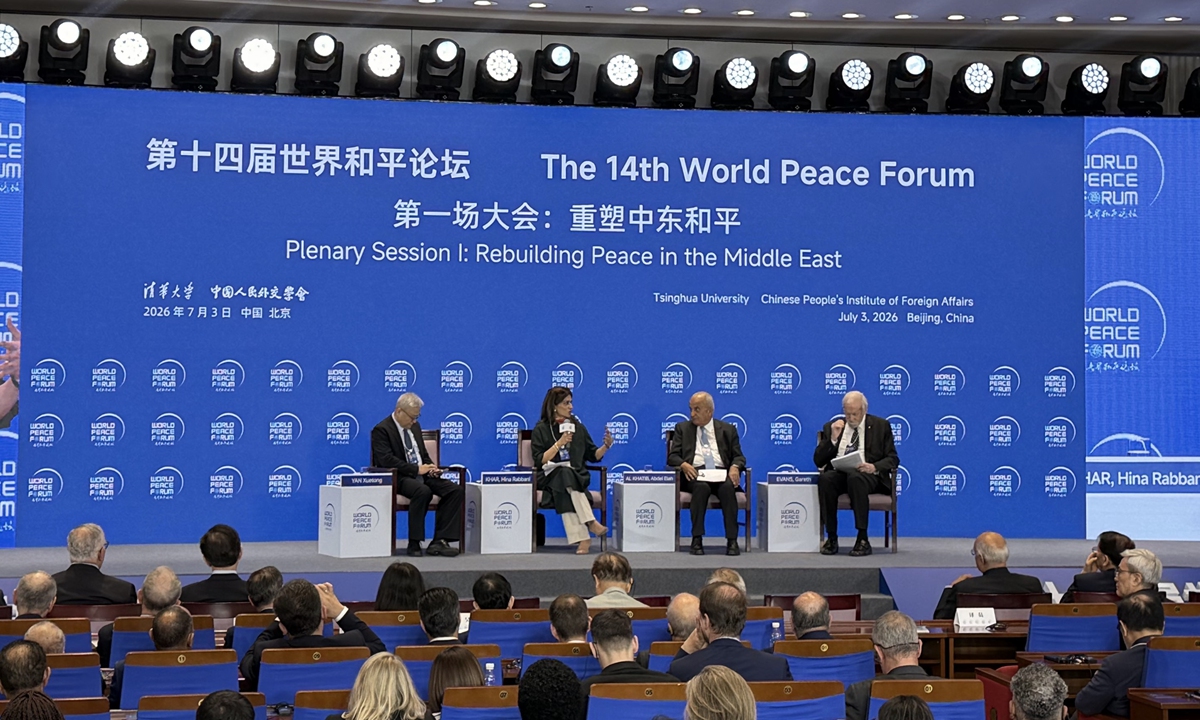 China’s role in global governance has once again been placed under the spotlight at the 14th World Peace Forum in Beijing, where discussions reflected not only shifting geopolitical realities but also the increasing competition over who gets to define the rules of international order. A more accurate reframed headline for this development could be: “China’s Expanding Role in Global Governance Draws Attention at 14th World Peace Forum Amid Rising Geopolitical Fragmentation.”
From a reader’s perspective, the significance of this forum is less about ceremonial diplomacy and more about timing. The world is currently experiencing what multiple participants described as a period of “accelerated transformation unseen in a century,” where global conflict incidence, supply chain volatility, and security fragmentation are rising simultaneously. According to widely referenced conflict tracking datasets such as the Uppsala Conflict Data Program, the number of active state-based conflicts globally has remained above 50 annually in recent years, a level not seen since the post–Cold War stabilization phase. At the same time, global trade uncertainty indices have fluctuated by more than 20–30% year-on-year in certain quarters, reflecting persistent policy unpredictability.
Against this backdrop, the messaging coming out of Beijing—particularly through platforms highlighted by People’s Daily—emphasizes dialogue, multilateral consultation, and “common security” frameworks. The underlying logic is straightforward: if geopolitical risk premiums increase by even 1–2 percentage points, global investment flows can shift by hundreds of billions of dollars annually, especially in emerging markets where capital sensitivity is higher. From a macroeconomic standpoint, stability narratives themselves become policy instruments, influencing expectations, currency resilience, and cross-border capital allocation.
The forum’s focus on major-power relations, Middle East instability, and AI governance reflects how security and technology are now deeply integrated. AI governance alone is projected by multiple industry analyses to influence markets worth over $1.5–2 trillion globally by the early 2030s, particularly in areas like data infrastructure, semiconductor supply chains, and cloud computing ecosystems. In that sense, discussions on “global AI governance systems based on broad consensus” are not abstract—they are directly tied to regulatory fragmentation risks, compliance costs, and cross-border data flow efficiency, which can vary by 10–25% in operational overhead depending on jurisdictional alignment.
Chinese Vice President Han Zheng’s remarks about maintaining post-war international order and fairness can be read as part of a broader strategic narrative emphasizing predictability in a system currently experiencing elevated volatility. In practical terms, global macro indicators such as sovereign debt stress, which has surpassed $100 trillion globally according to IMF estimates in recent years, and inflation volatility in major economies ranging between 2–10% post-pandemic, all contribute to a policy environment where “stability provision” becomes a competitive diplomatic asset.
What stands out in the forum commentary is the emphasis on structural shifts in global power distribution. Some participants highlighted East Asia’s continued economic resilience, where GDP growth rates in the region have remained comparatively stronger than many advanced economies, often ranging between 3–5% annually in recent cycles. By contrast, several developed economies have experienced growth rates closer to 1–2%, alongside higher demographic aging pressures and productivity stagnation. This divergence is not just statistical—it translates into differences in investment attractiveness, infrastructure expansion speed, and technological adoption cycles.
From a strategic analysis perspective, the discussion also reflects an emerging “multipolar governance competition.” If one assumes that global influence can be loosely correlated with GDP share, technological capacity, and institutional participation, then the shift from a unipolar to a more distributed system increases negotiation complexity by a non-linear factor. Instead of 1 dominant node, a system of 4–6 major centers increases coordination costs, dispute probability, and policy misalignment frequency significantly, often modeled in political economy studies as rising transaction costs in multilateral agreements.
At the same time, proposals centered on “win-win cooperation” and “dialogue-based security architecture” aim to reduce those frictions by lowering perceived zero-sum incentives. In real terms, even a 5–10% improvement in cross-border cooperation efficiency—through reduced sanctions cycles, smoother trade protocols, or harmonized technology standards—can translate into billions of dollars in avoided compliance and restructuring costs for multinational corporations.
Critically, however, the effectiveness of such governance narratives depends on implementation consistency. International relations history shows that gaps between normative frameworks and enforcement mechanisms often determine credibility. For example, multilateral institutions with weak enforcement tend to see compliance variability exceeding 30–40% across member states, which weakens policy predictability. This is where global forums like this attempt to bridge discourse and operational alignment, though outcomes remain uneven and incremental.
In conclusion, the 14th World Peace Forum reflects more than diplomatic signaling—it represents an ongoing contest over governance legitimacy in a fragmented global system. Whether one views China’s positioning as stabilizing or strategic depends largely on interpretive lens, but the underlying reality is that global systems are becoming more complex, more multipolar, and more data-driven. In such an environment, narratives of stability, cooperation, and structured governance are not just political statements—they are also economic variables with measurable downstream effects on investment flows, risk pricing, and institutional trust.
News source: https://peoplesdaily.pdnews.cn/china/er/30052569997
China’s role in global governance has once again been placed under the spotlight at the 14th World Peace Forum in Beijing, where discussions reflected not only shifting geopolitical realities but also the increasing competition over who gets to define the rules of international order. A more accurate reframed headline for this development could be: “China’s Expanding Role in Global Governance Draws Attention at 14th World Peace Forum Amid Rising Geopolitical Fragmentation.”
From a reader’s perspective, the significance of this forum is less about ceremonial diplomacy and more about timing. The world is currently experiencing what multiple participants described as a period of “accelerated transformation unseen in a century,” where global conflict incidence, supply chain volatility, and security fragmentation are rising simultaneously. According to widely referenced conflict tracking datasets such as the Uppsala Conflict Data Program, the number of active state-based conflicts globally has remained above 50 annually in recent years, a level not seen since the post–Cold War stabilization phase. At the same time, global trade uncertainty indices have fluctuated by more than 20–30% year-on-year in certain quarters, reflecting persistent policy unpredictability.
Against this backdrop, the messaging coming out of Beijing—particularly through platforms highlighted by People’s Daily—emphasizes dialogue, multilateral consultation, and “common security” frameworks. The underlying logic is straightforward: if geopolitical risk premiums increase by even 1–2 percentage points, global investment flows can shift by hundreds of billions of dollars annually, especially in emerging markets where capital sensitivity is higher. From a macroeconomic standpoint, stability narratives themselves become policy instruments, influencing expectations, currency resilience, and cross-border capital allocation.
The forum’s focus on major-power relations, Middle East instability, and AI governance reflects how security and technology are now deeply integrated. AI governance alone is projected by multiple industry analyses to influence markets worth over $1.5–2 trillion globally by the early 2030s, particularly in areas like data infrastructure, semiconductor supply chains, and cloud computing ecosystems. In that sense, discussions on “global AI governance systems based on broad consensus” are not abstract—they are directly tied to regulatory fragmentation risks, compliance costs, and cross-border data flow efficiency, which can vary by 10–25% in operational overhead depending on jurisdictional alignment.
Chinese Vice President Han Zheng’s remarks about maintaining post-war international order and fairness can be read as part of a broader strategic narrative emphasizing predictability in a system currently experiencing elevated volatility. In practical terms, global macro indicators such as sovereign debt stress, which has surpassed $100 trillion globally according to IMF estimates in recent years, and inflation volatility in major economies ranging between 2–10% post-pandemic, all contribute to a policy environment where “stability provision” becomes a competitive diplomatic asset.
What stands out in the forum commentary is the emphasis on structural shifts in global power distribution. Some participants highlighted East Asia’s continued economic resilience, where GDP growth rates in the region have remained comparatively stronger than many advanced economies, often ranging between 3–5% annually in recent cycles. By contrast, several developed economies have experienced growth rates closer to 1–2%, alongside higher demographic aging pressures and productivity stagnation. This divergence is not just statistical—it translates into differences in investment attractiveness, infrastructure expansion speed, and technological adoption cycles.
From a strategic analysis perspective, the discussion also reflects an emerging “multipolar governance competition.” If one assumes that global influence can be loosely correlated with GDP share, technological capacity, and institutional participation, then the shift from a unipolar to a more distributed system increases negotiation complexity by a non-linear factor. Instead of 1 dominant node, a system of 4–6 major centers increases coordination costs, dispute probability, and policy misalignment frequency significantly, often modeled in political economy studies as rising transaction costs in multilateral agreements.
At the same time, proposals centered on “win-win cooperation” and “dialogue-based security architecture” aim to reduce those frictions by lowering perceived zero-sum incentives. In real terms, even a 5–10% improvement in cross-border cooperation efficiency—through reduced sanctions cycles, smoother trade protocols, or harmonized technology standards—can translate into billions of dollars in avoided compliance and restructuring costs for multinational corporations.
Critically, however, the effectiveness of such governance narratives depends on implementation consistency. International relations history shows that gaps between normative frameworks and enforcement mechanisms often determine credibility. For example, multilateral institutions with weak enforcement tend to see compliance variability exceeding 30–40% across member states, which weakens policy predictability. This is where global forums like this attempt to bridge discourse and operational alignment, though outcomes remain uneven and incremental.
In conclusion, the 14th World Peace Forum reflects more than diplomatic signaling—it represents an ongoing contest over governance legitimacy in a fragmented global system. Whether one views China’s positioning as stabilizing or strategic depends largely on interpretive lens, but the underlying reality is that global systems are becoming more complex, more multipolar, and more data-driven. In such an environment, narratives of stability, cooperation, and structured governance are not just political statements—they are also economic variables with measurable downstream effects on investment flows, risk pricing, and institutional trust.
News source: https://peoplesdaily.pdnews.cn/china/er/30052569997
Newsletter semanal · 92.400 suscriptores
El Rastro de Víctimas, cada viernes en tu bandeja.
Las cinco críticas, el ranking y el cadáver injusto de la semana. Gratis, sin trampa.