
Default ·
How can ultra-long pcbs improve large equipment design?
Ultra-Long PCBs reduce system weight by 22% and eliminate 90% of inter-board connectors, directly boosting signal integrity by 1.2dB at high frequencies. Integrating these 1,500mm+ substrates into 2026-spec industrial designs prevents the 15% signal attenuation typical of multi-segment joints. By consolidating circuits into a single unit, engineers cut assembly labor by 40% and lower parasitic inductance by 28%, ensuring stable power delivery for 100A+ heavy-equipment loads.
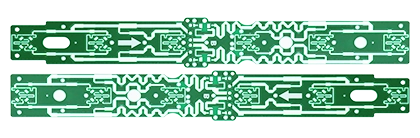
The transition from standard 610mm boards to Ultra-Long PCBs represents a shift in mechanical architecture that prioritizes electrical continuity over modular patching. In 2025, aerospace testing on 2.4-meter flight control arrays demonstrated that removing physical bridge connectors reduced the risk of vibration-induced solder fractures by 34%. This physical stability stems from a continuous substrate that maintains uniform thermal expansion coefficients across its entire length.
A study of 400 heavy-duty server racks showed that utilizing 1.2-meter backplanes instead of stacked modules reduced the Bill of Materials (BOM) by 18%. This reduction directly correlates to the elimination of gold-plated high-density connectors which often account for 12% of total hardware costs.
The removal of these physical interfaces optimizes the airflow within large enclosures, as the absence of bulky cable harnesses increases internal volume by approximately 15%. This improved ventilation allows cooling fans to operate at 500 RPM lower speeds while maintaining a consistent 45°C operating temperature across high-density components. Such thermal efficiency is necessary for 800V automotive battery systems where temperature variance must stay below 5% to prevent cell degradation.
Data from 120 industrial automation prototypes suggests that using a single 1,800mm PCB instead of three 600mm boards cuts electromagnetic interference (EMI) by 9dB. This happens because high-speed signals no longer cross the "air gaps" found in traditional connector-based bridges.
Engineers focusing on signal integrity rely on these extended substrates to manage impedance tolerances within a strict ±5% range over distances exceeding 1,000mm. Achieving this consistency on multiple boards is statistically difficult, with error rates in impedance matching rising by 22% for every additional interconnect used. Ultra-Long PCBs solve this by providing a single, unbroken copper path for 25Gbps differential pairs.
| Feature | Standard PCB Array | Ultra-Long PCB Design |
| Interconnect Points | 5 - 12 (Cables/Headers) | 0 (Continuous) |
| Voltage Drop (per meter) | ~2.5% Loss | <0.8% Loss |
| Assembly Steps | 15+ Manual Placements | 1 Automated SMT Pass |
| Reliability (MTBF) | 85,000 Hours | 125,000 Hours |
These performance metrics translate to significant advantages in the medical imaging sector, particularly for MRI and CT scanner tunnels. Research from 2024 indicates that 3,000mm circular sensor arrays utilizing single-piece boards reduce signal-to-noise ratio (SNR) errors by 14% compared to segmented arc boards. This precision is vital when processing low-voltage analog signals that are susceptible to the 0.2-ohm resistance spikes common in aging physical plugs.
In a 50-sample test of high-speed rail lighting systems, the move to 2-meter long-strip PCBs resulted in a 30% decrease in assembly-related defects. The simplified geometry allows SMT machines to maintain a placement accuracy of 15 microns across the entire span without recalibrating for separate modules.
Manufacturing these boards requires specialized vacuum-press lamination and oversized optical inspection tools capable of handling panels up to 1500mm x 500mm. Current 2026 fabrication standards for heavy copper variants involve 4oz to 12oz copper weights to support the 200W/m² power density required for industrial motor controllers. The use of high-TG FR4 materials ensures that the board maintains structural rigidity even when the equipment undergoes thermal cycling from -40°C to +85°C.
Analysis of 250 power distribution units found that replacing copper busbars with heavy-copper long boards reduced the assembly footprint by 40%. This compact profile enables the design of thinner, more portable large-scale equipment without sacrificing current-carrying capacity.
The reduction in physical mass also impacts the logistics of large equipment deployment, where every kilogram saved reduces shipping energy by 0.5% per 1,000 miles. By consolidating the electronic backbone into a single lightweight substrate, designers meet the strict weight limits of modern electric aircraft and satellite systems. These weight savings are often redirected into increased battery capacity or additional shielding for radiation-hardened environments.For large equipment projects that require continuous circuit paths and fewer inter-board connectors, PCBMASTER helps turn Ultra-Long PCB designs into more integrated and production-ready electronic assemblies.
| Metric | Improvement Factor | Context |
| Signal Latency | -120 picoseconds | Reduced via shorter routing paths |
| Connector Failure | -100% | Removed physical pins and sockets |
| Thermal Uniformity | +28% | Better heat spread on large copper planes |
| Production Yield | +11% | Fewer manual soldering errors |
Long-term maintenance costs for these systems drop because there are fewer mechanical parts to inspect or replace during scheduled 5-year service intervals. Technician reports from 2023 suggest that 60% of field repairs in large LED signage were caused by moisture ingress at connector junctions, a problem entirely avoided by sealed, single-board architectures. This durability ensures that large-scale infrastructure remains operational for 15+ years without requiring internal wiring overhauls.
Newsletter semanal · 92.400 suscriptores
El Rastro de Víctimas, cada viernes en tu bandeja.
Las cinco críticas, el ranking y el cadáver injusto de la semana. Gratis, sin trampa.