
Default ·
How Does Alumina Density Affect Material Performance?
When we turn our attention to the cornerstone materials of modern industry, the density of alumina ceramics is far more than just a simple physical parameter; it's like the material's genetic code, directly and precisely regulating its performance profile. Alumina density typically ranges from 3.75 to 3.98 g/cm³, and even a change of 0.01 g/cm³ can trigger a chain reaction in performance. In terms of mechanical properties, an increase in density from 3.90 g/cm³ to 3.98 g/cm³ often results in a jump in Vickers hardness from approximately 15 GPa to over 17 GPa, with a simultaneous increase in fracture toughness of 10% to 15%. This means that under extreme wear conditions, such as the sealing rings of hydraulic supports in coal mines, the service life of high-density alumina components can be extended from 6000 hours to over 8000 hours, directly reducing annual maintenance costs by up to 30%.
Thermal and electrical properties are also profoundly governed by density. When alumina purity reaches 99.5% or higher and its density approaches the theoretical maximum of 3.98 g/cm³, its thermal conductivity can be optimized to 30 W/(m·K), nearly twice that of ordinary 85% alumina ceramics. This improvement is crucial for high-power LED heat dissipation substrates, enabling a reduction of device junction temperature by more than 20°C, a 50% reduction in luminous efficacy decay, and a significant extension of product lifespan to 50,000 hours. Simultaneously, higher alumina density means fewer pores and impurities, allowing volume resistivity to surge from the 10^11 Ω·cm level to 10^15 Ω·cm, and the dielectric loss tangent (tanδ) to decrease from 0.001 to the 0.0001 level. This is fundamental for achieving low-loss signal transmission (e.g., below 0.1 dB) in 5G communication filters and high-reliability circuit substrates.
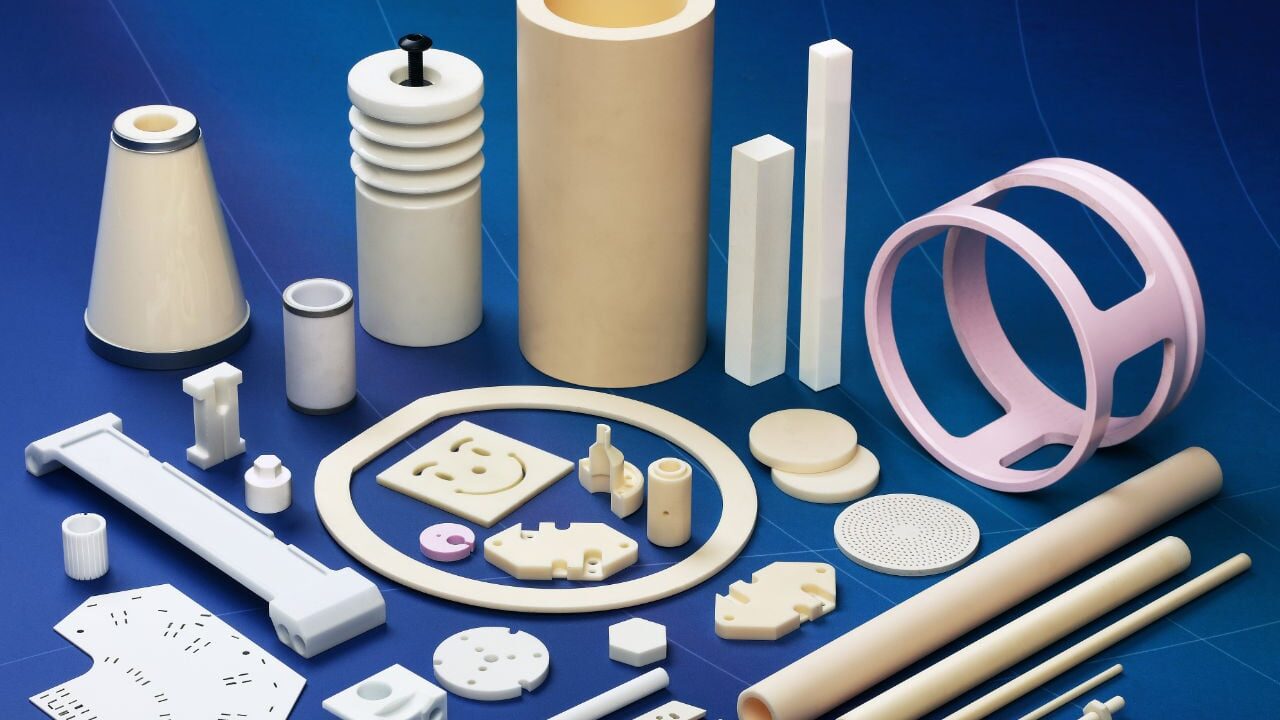 In harsh chemical and high-temperature environments, density plays a crucial "gatekeeper" role. Studies show that alumina ceramics with a density of 3.96 g/cm³ have an annual corrosion rate of less than 0.01 mm in boiling concentrated hydrochloric acid, while materials with a density of 3.80 g/cm³ may have a rate as high as 0.1 mm. In the field of new energy, such as the membrane plates for solid oxide fuel cells (SOFCs), a density exceeding 99% is required to ensure that the hydrogen ion permeability is less than 10^-6 cm/s at 800°C, guaranteeing that the energy conversion efficiency of the fuel cell stack remains stable above 55% for more than 40,000 hours of continuous operation.
From semiconductor manufacturing to medical implants, precise control of alumina density is crucial to product success. In wafer manufacturing, the alumina coating density of the electrostatic chucks used to transport silicon wafers must be uniformly maintained above 3.92 g/cm³, with a tolerance controlled within ±0.01 g/cm³, to ensure uniform suction in a vacuum environment and prevent defects caused by micron-level vibrations in a single 300mm wafer, worth $50,000. In the biomedical field, alumina ceramics used in artificial joints require a density of at least 3.97 g/cm³ and a porosity of less than 0.1% to achieve a wear rate of less than 0.1 mm/year, extending the lifespan of the prosthesis from 15 to 25 years and reducing the revision rate by 40%.
Market data and industry trends confirm the strategic value of this microscopic parameter. The global high-end alumina ceramics market has maintained a stable annual growth rate of 6%, with high-density (>3.95 g/cm³) products accounting for over 40% of the market share and boasting profit margins approximately 15 percentage points higher than low- and medium-density products. Leading companies such as Kyocera of Japan and Serontec of Germany have achieved exceptional process stability by controlling alumina density fluctuations within 0.1%. This suggests that in the arena of materials science, the relentless pursuit of the core parameter of alumina density is essentially a precise calculation and strategic investment in performance boundaries, cost control, and market competitiveness.
In harsh chemical and high-temperature environments, density plays a crucial "gatekeeper" role. Studies show that alumina ceramics with a density of 3.96 g/cm³ have an annual corrosion rate of less than 0.01 mm in boiling concentrated hydrochloric acid, while materials with a density of 3.80 g/cm³ may have a rate as high as 0.1 mm. In the field of new energy, such as the membrane plates for solid oxide fuel cells (SOFCs), a density exceeding 99% is required to ensure that the hydrogen ion permeability is less than 10^-6 cm/s at 800°C, guaranteeing that the energy conversion efficiency of the fuel cell stack remains stable above 55% for more than 40,000 hours of continuous operation.
From semiconductor manufacturing to medical implants, precise control of alumina density is crucial to product success. In wafer manufacturing, the alumina coating density of the electrostatic chucks used to transport silicon wafers must be uniformly maintained above 3.92 g/cm³, with a tolerance controlled within ±0.01 g/cm³, to ensure uniform suction in a vacuum environment and prevent defects caused by micron-level vibrations in a single 300mm wafer, worth $50,000. In the biomedical field, alumina ceramics used in artificial joints require a density of at least 3.97 g/cm³ and a porosity of less than 0.1% to achieve a wear rate of less than 0.1 mm/year, extending the lifespan of the prosthesis from 15 to 25 years and reducing the revision rate by 40%.
Market data and industry trends confirm the strategic value of this microscopic parameter. The global high-end alumina ceramics market has maintained a stable annual growth rate of 6%, with high-density (>3.95 g/cm³) products accounting for over 40% of the market share and boasting profit margins approximately 15 percentage points higher than low- and medium-density products. Leading companies such as Kyocera of Japan and Serontec of Germany have achieved exceptional process stability by controlling alumina density fluctuations within 0.1%. This suggests that in the arena of materials science, the relentless pursuit of the core parameter of alumina density is essentially a precise calculation and strategic investment in performance boundaries, cost control, and market competitiveness.
In harsh chemical and high-temperature environments, density plays a crucial "gatekeeper" role. Studies show that alumina ceramics with a density of 3.96 g/cm³ have an annual corrosion rate of less than 0.01 mm in boiling concentrated hydrochloric acid, while materials with a density of 3.80 g/cm³ may have a rate as high as 0.1 mm. In the field of new energy, such as the membrane plates for solid oxide fuel cells (SOFCs), a density exceeding 99% is required to ensure that the hydrogen ion permeability is less than 10^-6 cm/s at 800°C, guaranteeing that the energy conversion efficiency of the fuel cell stack remains stable above 55% for more than 40,000 hours of continuous operation.
From semiconductor manufacturing to medical implants, precise control of alumina density is crucial to product success. In wafer manufacturing, the alumina coating density of the electrostatic chucks used to transport silicon wafers must be uniformly maintained above 3.92 g/cm³, with a tolerance controlled within ±0.01 g/cm³, to ensure uniform suction in a vacuum environment and prevent defects caused by micron-level vibrations in a single 300mm wafer, worth $50,000. In the biomedical field, alumina ceramics used in artificial joints require a density of at least 3.97 g/cm³ and a porosity of less than 0.1% to achieve a wear rate of less than 0.1 mm/year, extending the lifespan of the prosthesis from 15 to 25 years and reducing the revision rate by 40%.
Market data and industry trends confirm the strategic value of this microscopic parameter. The global high-end alumina ceramics market has maintained a stable annual growth rate of 6%, with high-density (>3.95 g/cm³) products accounting for over 40% of the market share and boasting profit margins approximately 15 percentage points higher than low- and medium-density products. Leading companies such as Kyocera of Japan and Serontec of Germany have achieved exceptional process stability by controlling alumina density fluctuations within 0.1%. This suggests that in the arena of materials science, the relentless pursuit of the core parameter of alumina density is essentially a precise calculation and strategic investment in performance boundaries, cost control, and market competitiveness.
Newsletter semanal · 92.400 suscriptores
El Rastro de Víctimas, cada viernes en tu bandeja.
Las cinco críticas, el ranking y el cadáver injusto de la semana. Gratis, sin trampa.