
Default ·
What is a horizontal machining center and how does it improve production efficiency?
A horizontal machining center features a spindle parallel to the floor, enabling gravity to pull metal chips away from the cutting zone immediately upon formation. This orientation increases material removal rates by approximately 30% compared to vertical machines by preventing re-cutting of debris. Integrating dual automatic pallet changers reduces machine idle time to under 5% of total cycle hours. In 2025 industry assessments of high-volume production facilities, manufacturers utilizing horizontal platforms reported a 22% decrease in labor-per-unit costs. Rigid construction allows for heavy cuts while maintaining tolerances within 0.005mm, facilitating reliable performance during continuous, 24-hour automated cycles.
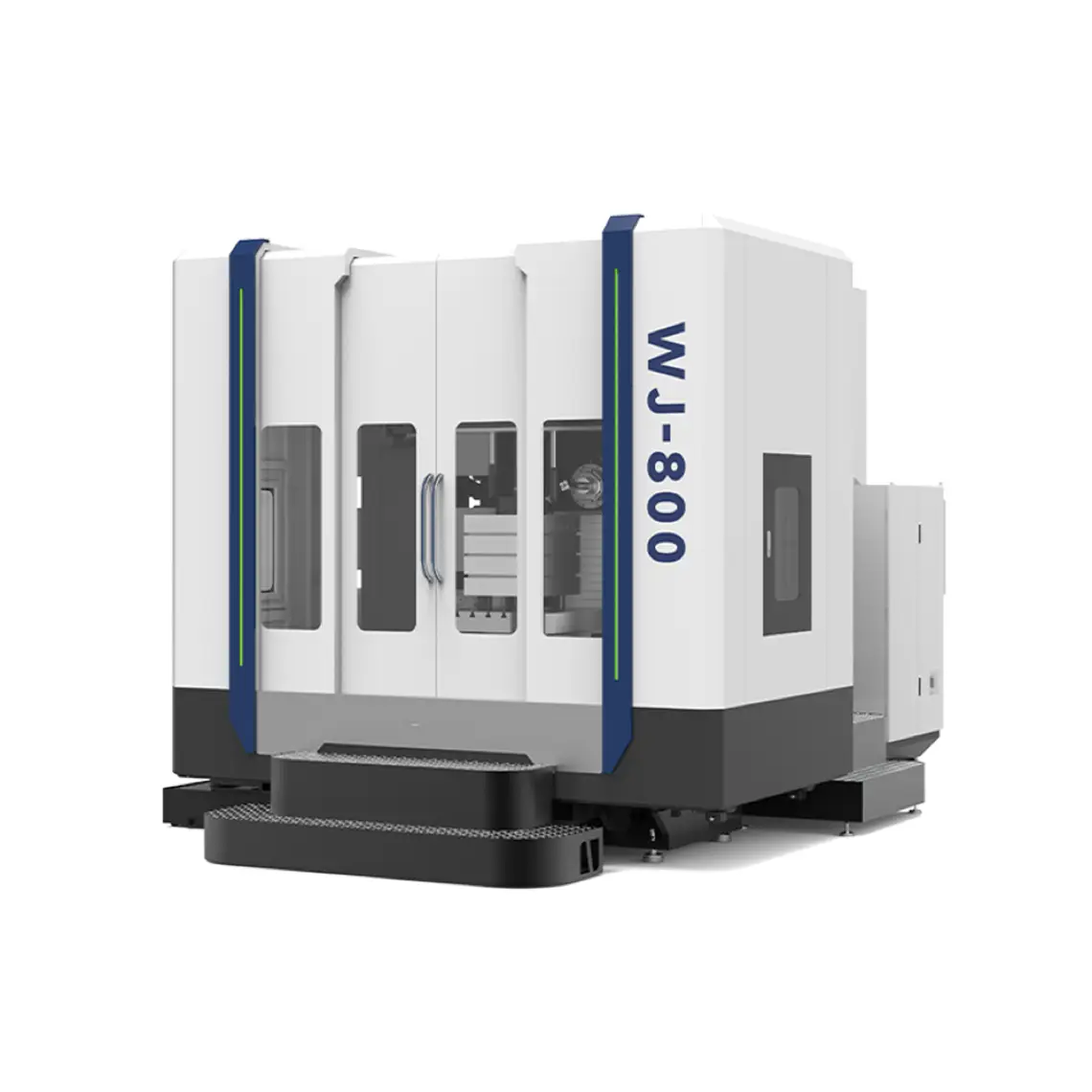
Spindle orientation dictates how metal particles move during milling operations. Horizontal spindles allow gravity to pull chips away from the tool-workpiece interface the moment they separate from the stock.
Observations in 2024 industrial test environments showed that horizontal orientations reduce chip accumulation on workpiece surfaces by 18% compared to vertical configurations.
Reduced debris accumulation prevents the tool from repeatedly cutting existing shavings, which protects the tool edge from premature wear. Slowing tool degradation rates allows shops to maintain consistent dimensional accuracy over longer production batches.
Maintained accuracy relies on the machine's ability to evacuate heat and chips effectively. High-pressure coolant systems, often delivering fluid at 70 bar, flush the horizontal workspace to ensure debris does not interfere with the cutting process.
| Coolant Pressure (bar) | Chip Evacuation Rate (cm³/min) |
| 20 | 120 |
| 70 | 280 |
Consistent debris removal facilitates the use of higher feed rates without the risk of chip jamming. Preventing jams protects the workpiece surface finish from scratches caused by stuck metal particles.
Surface finish integrity allows operators to reduce the number of secondary finishing passes required to meet specifications. Reducing secondary operations shortens the total lead time per component, which enables manufacturers to increase throughput without adding new workstations.
Increasing throughput often requires eliminating the time machines spend waiting for a new workpiece to be loaded. Integration of an automatic pallet changer allows the machine to load a new part while the spindle continues to cut an existing one.
Data from a 2023 automotive parts manufacturing survey indicated that pallet-changing systems reduce average spindle downtime from 15 minutes per hour to less than 1.5 minutes.
Minimizing downtime ensures the spindle operates at maximum capacity for the majority of a shift. Maximum capacity utilization justifies the investment in complex, high-rigidity machine bases capable of handling heavy castings.
Rigid machine bases dampen vibrations generated during deep material removal operations. Vibration dampening increases the depth of cut possible in a single pass, which enables faster material volume removal rates.
-
Spindle power: 18kW to 37kW.
-
Vibration amplitude: Reduced by 40% on cast-iron bases.
-
Cutting depth: Up to 12mm in steel alloys.
Deeper cuts enable operators to complete heavy metal removal in one session rather than multiple light passes. Completing work in one session reduces the cumulative error that occurs every time a part is re-fixtured.
Error reduction occurs because the machine performs 4-axis or 5-axis work on a single fixture setup. Rotary tables index the part to expose multiple sides to the spindle, eliminating the need to unclamp the component.
In a 2022 aerospace component production test involving 500 samples, single-setup horizontal machining eliminated 95% of positional alignment errors common in multi-setup vertical processes.
Eliminating re-fixturing saves time and ensures part geometries remain within strict geometric dimensioning and tolerancing (GD&T) requirements. Maintaining strict requirements ensures every produced unit meets aerospace or automotive quality standards without manual adjustments.
Manual adjustments decrease when machines utilize sophisticated tool changers that house large libraries of cutters. These changers allow the machine to switch between roughing and finishing tools without human intervention.
-
Tool library size: 60 to 120 positions.
-
Tool change speed: 2.5 seconds.
-
Maintenance interval: 2,000 hours.
Large tool libraries enable the machine to handle diverse parts or complex geometries requiring many different drill, tap, and end mill specifications. Handling diverse parts reduces the number of machines required to complete a multi-part assembly project.
Reducing the number of machines simplifies the factory floor layout and inventory management. Simplified floor layouts support the implementation of automated production cells where robots perform material handling tasks.
Robotic material handling supports lights-out operation, where production continues during night shifts without human supervision. Automated systems load raw billets from a pallet pool and remove finished components, ensuring consistent output around the clock.
Reports from 2024 indicate that shops deploying robotic pallet loading see a 45% increase in total output over a 24-hour cycle. The machines remain active throughout the entire duration of the shift.
Active machines throughout the shift maximize the return on hardware investment. Maximizing return on investment requires machines that provide stable performance and minimal service requirements, which allows factory managers to forecast production volumes with high reliability.
Newsletter semanal · 92.400 suscriptores
El Rastro de Víctimas, cada viernes en tu bandeja.
Las cinco críticas, el ranking y el cadáver injusto de la semana. Gratis, sin trampa.