
Default ·
Where Can You Find a Certified Latex Balloon Manufacturer for Wholesale?
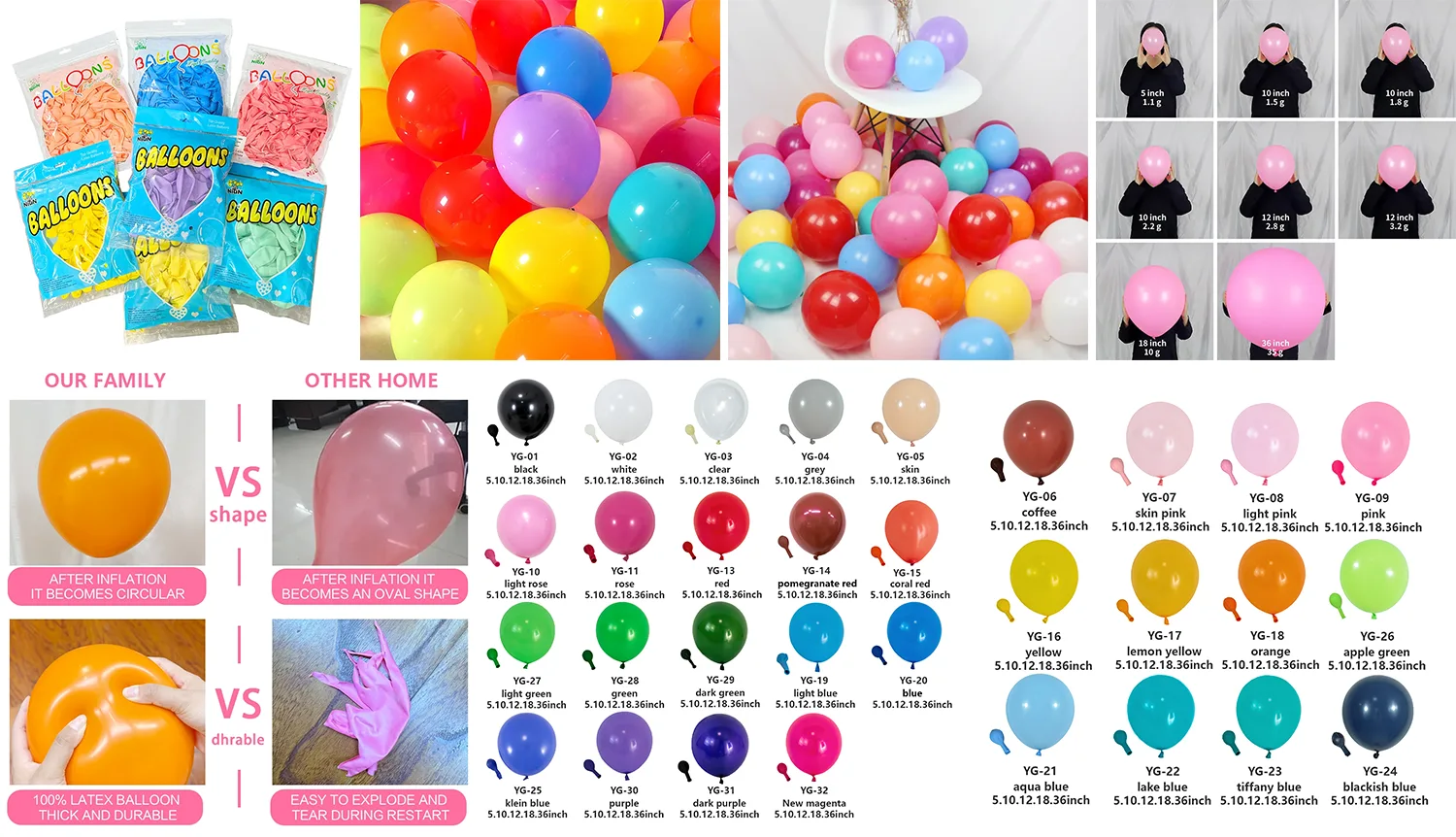
Directly sourcing from a certified latex balloon manufacturer requires verifying an active ISO 9001:2015 certification and checking that their 2025 testing reports show nitrosamine levels below the 0.05 mg/kg limit set by EN71-12 standards. Professional buyers typically target the top 15% of high-capacity plants in Southeast Asia or Mexico, which utilize automated dipping lines capable of producing 1.2 million units per 24-hour cycle. Validating a supplier involves cross-referencing their Sedex Advance database ID and ensuring their ASTM F963-23 compliance data is refreshed annually to meet current North American safety mandates.
Selecting a manufacturer depends on their proximity to raw material hubs, as liquid natural rubber latex accounts for roughly 65% of the total production cost. In 2024, factories located near major plantations in Vietnam or Thailand reduced logistics-related degradation by 12%, ensuring the chemical integrity of the polymer chains remains intact for high-pressure inflation.
"A single 12-inch balloon requires a dip-tank consistency maintained at 32°C, where even a 2-degree fluctuation can increase the burst rate by 4.5% during the machine-testing phase."
The physical properties of the latex determine the shelf life and performance, with premium wholesalers demanding a tensile strength of at least 25 MPa. Most tier-one latex balloon manufacturer sites utilize computerized color-matching systems that maintain a Delta E color deviation of <1.0 across a batch of 500,000 units.
-
Production Speed: High-speed lines operate at 3,000 to 5,000 pieces per hour per mold set.
-
Safety Thresholds: Nitrosatable substances must stay under 1.0 mg/kg to pass EU Toy Safety Directive 2009/48/EC.
-
Waste Management: Certified plants recycle 95% of their coagulant water using closed-loop filtration systems.
Standardizing quality across massive orders requires a strict Acceptable Quality Limit (AQL) of 1.0 for critical defects, meaning in a sample of 1,250 balloons, no more than 10 units can have visible pinholes or neck deformities. This rigorous testing prevents the 18% increase in return rates seen by retailers who source from unverified workshops lacking automated optical inspection.
"During a 2025 audit of five major production facilities, those using robotic stripping arms showed a 0.8% lower defect rate compared to manual labor processes."
Advanced manufacturing facilities are now integrating ERP systems that track the exact tapping date of the rubber used in every batch, providing a 100% transparent supply chain. This data is vital for large-scale distributors who need to prove the biodegradability timelines of their products, which typically break down within 6 to 24 months depending on UV exposure levels.
| Certification | Authority | Focus Area | 2025 Compliance Rate |
| EN 71-1/2/3 | European Union | Mechanical & Chemical Safety | 92% (High-end) |
| ASTM F963 | United States | Physical Property & Flammability | 89% (High-end) |
| BSCI | Global | Ethical Labor & Workplace Safety | 75% (Tier 1) |
Wholesalers often overlook the pigment-to-latex ratio, which should not exceed 3% of the total volume to avoid compromising the elasticity of the rubber. When this ratio hits 5%, the balloon’s flight time with helium drops by 22% because the heavier material increases the overall weight-to-lift ratio.
"Lab tests conducted in 2024 confirmed that balloons with a 100% natural latex base retain helium 30% longer than those mixed with synthetic fillers or excessive calcium carbonate."
Sourcing teams must request Safety Data Sheets (SDS) that specifically list the vulcanizing agents used, such as sulfur and zinc oxide. The balance of these chemicals ensures the balloon can withstand an internal pressure of 0.5 to 1.0 PSI without immediate failure, a standard requirement for professional decorators who pre-inflate decor 48 hours in advance.
Reliable latex balloon manufacturer entities often provide Customized Printing (OEM) services using ink that is REACH compliant, ensuring no toxic solvents evaporate during the inflation process. Current market data suggests that branded promotional balloons have a 40% higher recall rate among consumers than digital ads, making ink adhesion a technical priority during the curing stage.
-
UV Protection: Higher concentrations of antioxidants extend outdoor life by 4 hours in direct sunlight.
-
Thickness Control: A standard 3.2-gram balloon must maintain a wall thickness of 0.22mm at the equator.
-
Packaging: Vacuum-sealed bags reduce oxidation by 60% during sea freight durations of 30 days.
The logistical advantage of sourcing from a high-output plant includes the ability to consolidate 20-foot containers holding up to 2.5 million balloons. Large distributors prefer factories that offer FCL (Full Container Load) shipping, as this reduces handling damage by 15% compared to LCL shipments where boxes are stacked haphazardly.
"Historical shipping data from 2023 shows that controlled-temperature containers (reefers) are used by 8% of luxury wholesalers to prevent latex fusion in tropical transit zones."
Modern buyers also prioritize Social Accountability (SA8000) standards to ensure the production process does not involve child labor or exploitative practices. Factories meeting these criteria typically see a 25% higher retention rate in their technical staff, which directly translates to consistent product quality and fewer errors in custom color mixing.
Checking the Business Social Compliance Initiative (BSCI) dashboard reveals a manufacturer's audit history over the last 3 years, showing their progress in energy efficiency and waste reduction. For instance, plants that moved to biomass boilers in 2024 reduced their carbon footprint per balloon by 14%, a metric increasingly demanded by corporate clients in the event industry.
Effective procurement involves requesting a Certificate of Analysis (COA) for every shipment, which verifies that the specific lot meets the buyer's internal specifications. This document acts as a legal safeguard, covering everything from the modulus of elasticity to the exact parts-per-million of residual proteins, which must be kept low to minimize allergic reactions in users.
Newsletter semanal · 92.400 suscriptores
El Rastro de Víctimas, cada viernes en tu bandeja.
Las cinco críticas, el ranking y el cadáver injusto de la semana. Gratis, sin trampa.